

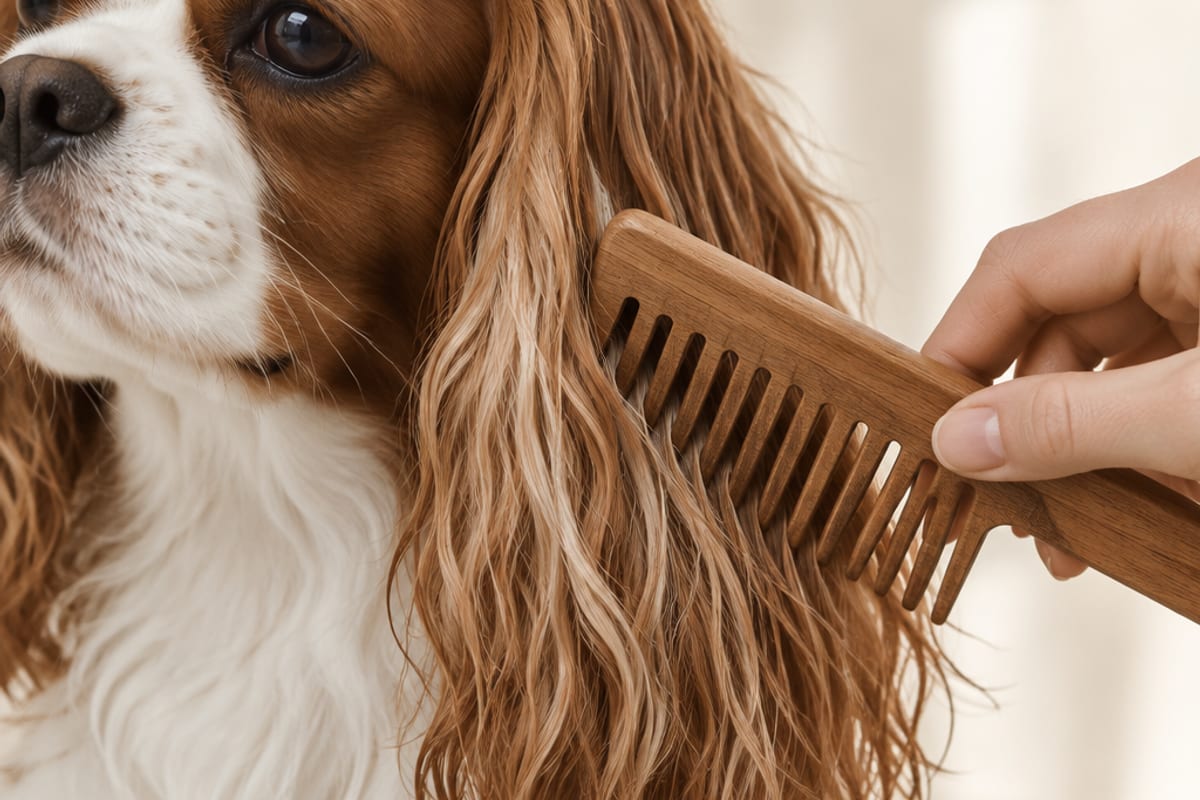
Brush, regularly and correctly
Brushing removes dead hair before it mats, lifts dust and dander, and spreads the skin's natural oils along each hair, which is where a coat's shine comes from. Short coats want a soft brush or a rubber mitt once or twice a week. Long and double coats want a comb through to the skin several times a week. Brushing only the top layer leaves the mats forming underneath untouched.
Dry after wet walks
Rain and snow are baths without the rinse. A coat that dries slowly against the skin, especially in the armpits and groin, is where hot spots and irritation start. Towel dry, including the belly and legs, and let the dog finish drying somewhere warm.
Detangle before the knot sets
Small tangles come out easily; the same tangle a week later needs cutting. A light detangling mist on a dry coat gives the comb something to slide on and reduces pulling at the skin. Start at the ends of the tangle and work towards the root, holding the hair above it so the skin is not tugged.
Wipes for the parts that get dirty
Paws, legs, faces and the area under the tail get dirty far more often than the whole dog needs washing. Plain, fragrance-free wipes handle those without another full bath and without disturbing the rest of the coat.
Check the skin while you are there
Brushing is the easiest time to notice things: a flaky patch, a small scab, a tick, a spot the dog flinches from. Catching these early is worth more than any product.