

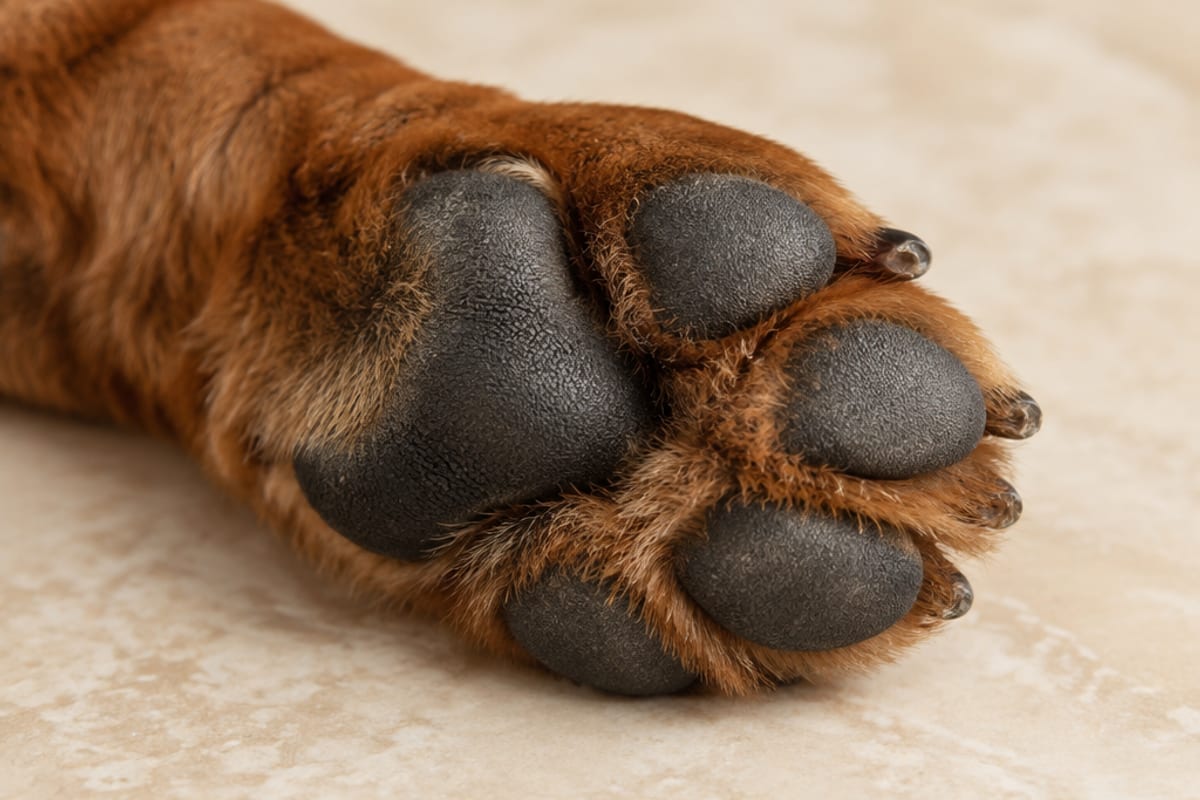
What pads are made of
The pad is a thick, cushioned layer of keratinised skin, much like a heavily calloused heel. It copes well with rough ground and moderate temperatures. It copes less well with repeated wetting and drying, with de-icing chemicals, and with the very dry air of a heated flat. Those are exactly the conditions of a city winter.
Why they crack
Moisture leaves the pad, the surface stiffens, and normal flexing opens small splits. Salt and grit draw out more moisture and lodge in the cracks. Once open, a crack is slow to close because the dog keeps walking on it. Early signs are a rougher, paler surface and a dog that licks its feet after walks.
A winter routine
Rinse or wipe the paws after every walk on treated pavements, including between the toes, then dry them. Keep the hair between the pads trimmed so ice and grit do not ball up. Apply a small amount of a paw balm to clean, dry pads, ideally in the evening when the dog is settled. Check the pads once a week in good light.
About balms
A good paw balm is absorbed into the pad rather than sitting on it. Petroleum jelly forms a slippery film on the surface, does little for the tissue underneath and ends up on the floor. Plant butters and waxes, worked in thinly, soften the keratin and help it hold moisture. Expect a dog to lick some off, so choose something made to be licked.
When it is more than dry
Deep splits that bleed, a pad that is swollen or hot, limping, or a crust that keeps building up despite care all warrant a vet. Some dogs develop a condition where pad keratin overgrows, and that needs a different kind of attention.