

What is on the pavement
In winter, de-icing salt and chemical thaw products. Year round, engine oil and brake dust near roads, fertilisers and weedkillers around planted areas, and the residue of pavement cleaning. None of it is dramatic on its own. All of it dries the pads, and a dog that licks its paws afterwards swallows it.
The two-minute habit
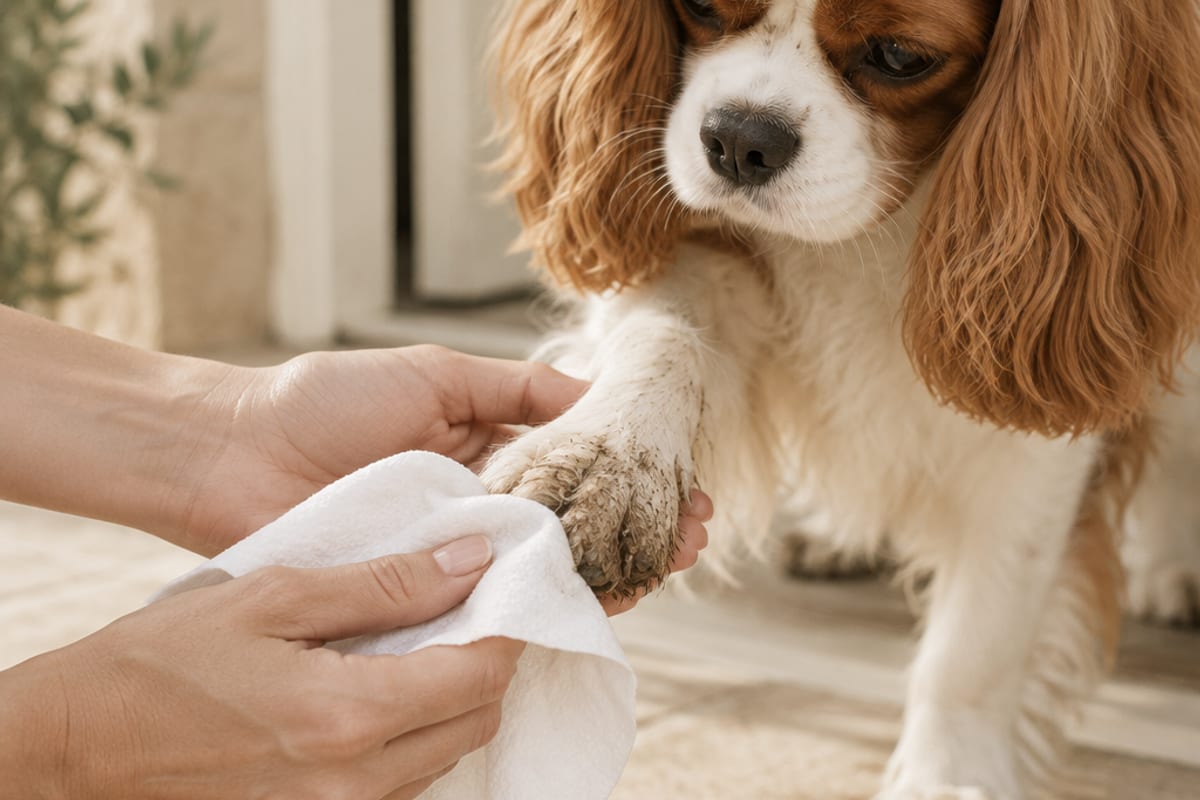
Keep wipes or a damp cloth and a towel by the door. Wipe each paw, including between the toes, then dry it. In wet weather, dry the legs and belly as well, since a coat that stays damp against the skin invites irritation. That is the whole routine, and it prevents most paw problems on its own.
Watch for licking
A dog that starts licking or chewing its feet after walks is telling you something is irritating them. Check between the toes for grit, redness or matted hair. Rinse with plain water if wipes are not enough. Persistent licking that leaves the hair stained brown is worth a vet's opinion, because it often has a cause beyond the pavement.
Trim, do not shave
Hair between the pads collects grit and forms ice balls in winter. Keeping it trimmed level with the pads helps. Shaving it completely removes protection the dog needs.
A little balm, not a lot
If the pads look dry after a week of city walking, a thin layer of balm in the evening restores suppleness. More is not better; a pad coated in product is slippery on a hard floor.